

The best IPTV plan isn't automatically the one with the most channels. A useful IPTV subscription plan comparison weighs internet needs, streaming quality, channel selection, VOD, commitment, and included features against how you actually watch. Monthly plans generally offer more cancellation flexibility than annual plans, while annual plans often have a lower effective monthly cost.
Compare more than the headline price. Device options, picture quality, content libraries, and included features all affect how a plan fits your daily viewing.
This guide breaks down the key differences in plain English, including how commitment affects flexibility and which features can matter most. Use the comparison criteria and decision guide to narrow your options without paying for features you won't use.
Key Takeaways
- Match connection capacity to the number of screens and the quality you want to stream.
- Compare picture quality, channel selection, and on-demand libraries to find a plan that fits your viewing habits.
- Weigh the flexibility of shorter commitments against the potential value of longer subscriptions.
- Look beyond the headline offer to see which extras, such as Timeshift or cloud-based recording, suit your routine.
Internet connection requirements
IPTV performance depends on both connection capacity and how many streams run together. A single television streaming a channel has different demands from a household watching separate programs on several screens. Compare plans against your real viewing setup, not just the number of channels advertised.
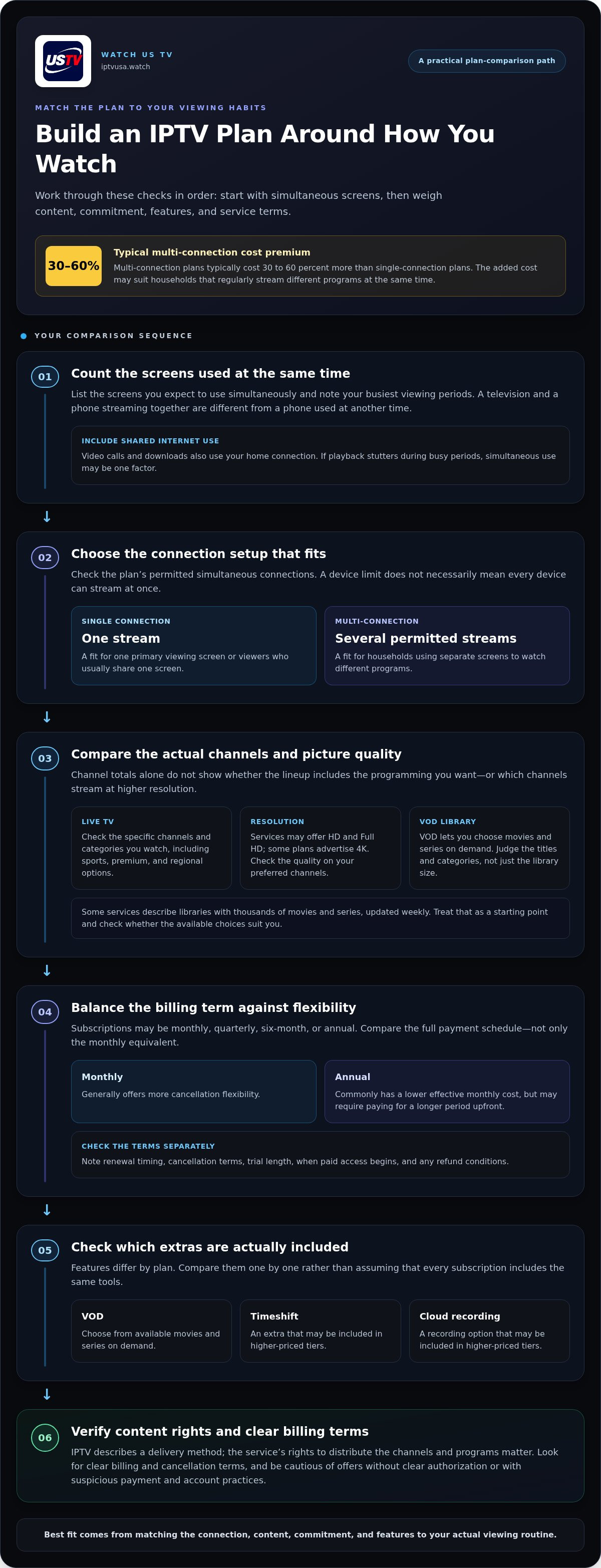
Start by counting the screens you expect to use simultaneously. For example, note whether one television streams while another household member watches on a phone. Then check the plan’s permitted simultaneous connections. A multi-device limit describes how many devices may use the service; it doesn’t necessarily mean every device can stream at once.
Your home internet connection is shared with other activity, such as video calls and downloads. If playback stutters during busy periods, simultaneous use may be one factor. Compare your usual peak-time activity with the number of screens you want watching together.
Multi-connection plans can cost more than single-connection plans. Typical IPTV multi-connection plans cost 30 to 60 percent more than single-connection plans. The added cost may suit households that regularly stream different programs at the same time. A single connection may be a better fit when viewers usually share one screen.
| Plan option | Connection setup | Best fit |
|---|---|---|
| Single connection | One stream at a time | One primary viewing screen |
| Multi-connection | Several permitted simultaneous streams | Households using separate screens |
Use the plan’s device option as a starting point, then consider how your household actually watches. A phone used at a different time doesn’t create the same need as a second screen streaming alongside the first.
Before choosing, list your usual screens, peak viewing periods, and other internet activity. For example, a television and tablet playing separate streams require more capacity than one shared television. Choose a connection option that matches those habits, then weigh its cost against how often separate streams matter.
Stream quality, channel counts, and VOD libraries
Compare what you can watch and the video quality offered. Channel totals matter less if the lineup doesn’t include the programming you want.
Live Channels, Movies, and Series
Live channels deliver scheduled programming, while VOD libraries let you choose movies and series on demand. Some IPTV services describe libraries containing thousands of movies and series, updated weekly. Treat that description as a starting point: check whether the titles and categories match what you watch. A broad library is useful only when it offers appealing choices, not just a large count.
Channel Quality Versus Count
Picture quality ranges by plan and provider. IPTV services may offer HD and Full HD, while some plans advertise 4K. A large channel count doesn’t tell you which channels stream in higher resolution. Compare the quality attached to the channels you actually watch, then weigh that against the lineup size. This helps distinguish useful viewing choices from an impressive total that adds little value.
DVR and On-Demand Content
Which IPTV services offer live TV, DVR, and on-demand content? IPTV services can combine live channels with VOD, while recording options vary by plan. Higher-priced tiers may include Timeshift and cloud-based recording. These features serve different needs: VOD offers available titles to choose from, while recording options help with live programming. Compare each feature separately instead of assuming every plan includes both.
Sports, Premium, and Regional Channels
Which IPTV plans include sports, premium channels, and regional sports networks? Channel lineups vary, so compare the actual categories and channels listed for each plan. Premium IPTV channels may include 4K channels, but premium status alone doesn’t show whether your preferred sports programming is included. Local news availability depends on the regional package. Use that package detail when judging regional coverage, then compare the sports selection directly.
For a focused TV subscription comparison, weigh resolution and the specific channels you want alongside library size and recording features.
Tiered IPTV pricing and commitment duration
Compare the billing period, total commitment, and included features together. IPTV subscriptions may be monthly, quarterly, six-month, or annual. Monthly plans generally offer more cancellation flexibility, while annual plans commonly have a lower effective monthly cost. A lower recurring rate may still mean paying for a longer period upfront.
For a fair comparison, note the full payment schedule and when renewal occurs. Then compare what each term buys, such as the same channel access across different commitment periods. Don’t treat a lower monthly equivalent as the only measure of value. Consider how long you expect to use the service and how much flexibility matters.
Free-trial duration and refund terms are separate decision points. Compare the trial’s length, when paid access begins, whether cancellation ends renewal, and which refund conditions apply. These details can change the real cost of trying a plan. Read the stated terms before choosing, especially if an offer converts to paid billing after a trial.
What are the best legal IPTV subscription services in the United States? The key consideration is whether a service is authorized to distribute the channels and programs it carries, and whether its billing and cancellation terms are clear. IPTV describes a delivery method; content rights matter too.
Are IPTV subscriptions legal in the United States, and how can consumers spot illegal services? IPTV subscriptions can be lawful, but legality depends on the rights to distribute the content. Be cautious of offers claiming access to protected channels or programs without clear authorization, or that rely on suspicious payment and account practices.
Use this comparison sequence before committing:
- Match the monthly, quarterly, six-month, or annual term to your intended use.
- Compare renewal timing, cancellation terms, trial length, and refund conditions.
- Assess whether the service clearly explains its content and billing arrangements.
Choose a plan duration and device option that fit your viewing habits, rather than deciding by a headline feature alone.
Features included across subscription plans
Plan names don’t explain how each feature fits your routine. Compare the listed features with what you watch and how you watch it. A feature is useful when it meets a real viewing need, not just because it appears in a plan description.
Two features worth comparing are Timeshift and cloud-based recording. Higher-priced IPTV tiers may include both, but they serve different viewing needs. Timeshift relates to controlling live programming, while cloud-based recording lets you save programming remotely. Look at each feature separately instead of treating them as interchangeable extras.
- Timeshift: Consider whether pausing or catching up with live programming fits your routine.
- Cloud-based recording: Consider whether saving programs to watch later is useful.
Next, compare how clearly the plan describes each feature. An IPTV subscription plan comparison should distinguish a named feature from a vague “premium extras” label. For example, a plan that identifies Timeshift gives you a specific capability to weigh, while a general label doesn’t explain what you can do. Focus on the feature’s practical use, not just its position in a tier.
Build a short checklist before choosing. Mark each listed feature as essential, useful, or unnecessary for your household. If you watch scheduled programs live, Timeshift may matter more. If you often miss broadcasts and want to save them, cloud-based recording may be more relevant. Compare those priorities with the plan descriptions, then choose the tier that fits how you watch.
Keep the decision grounded in actual use. A feature adds value when it meets a viewing need. Compare included features alongside the channels and content you expect to watch, so extras don’t distract from your main priorities.
Explore IPTV subscription plan options and compare the features that fit your viewing habits.
WATCH US TV: Premium Strong8k Elite Plans
WATCH US TV offers Premium Strong8k Elite Plans for viewers comparing IPTV subscriptions around their preferred viewing experience. These high-tier streaming subscriptions are tailored for high-performance television viewing. If you’re weighing service options after comparing connection needs, picture quality, channels, and plan features, consider whether this offering fits your priorities.
WATCH US TV also offers USTVAWATCH Elite Plans and USA TV SUBSCRIPTION SERVICE. Compare the available plans against the viewing criteria that matter most to you, rather than choosing by a tier name alone. A subscription service is the natural next step when you’re ready to select a television streaming plan that suits your needs.
Contact WATCH US TV to explore its IPTV subscription options.
Choose your next plan with confidence
Turn your comparison into a shortlist. Decide which device option and duration fit your viewing habits, then compare the listed features and content. A clear IPTV subscription plan comparison helps you make a deliberate choice instead of letting one headline feature decide for you.
WATCH US TV offers Premium Strong8k Elite Plans, USTVAWATCH Elite Plans, and USA TV SUBSCRIPTION SERVICE. Consider these options as you narrow your television streaming choice. Focus on the viewing experience you want, and choose a plan that reflects those priorities rather than selecting by its name alone.
Your next step can be simple: explore the available options and decide which one merits a closer look. Contact WATCH US TV to explore its subscription options. Take the information you’ve gathered, make the choice that fits your needs, and move forward with confidence.
Frequently Asked Questions
How much do popular IPTV subscriptions cost per month and per year?
IPTV subscription prices vary by provider, plan length, and number of connections. A monthly option may cost more per month but lets you reassess sooner, while a longer term can lower the effective monthly cost. Compare the full amount charged for the selected term, renewal timing, and what’s included. Don’t treat a monthly equivalent as the total amount due upfront.
What channels and local networks are included in each IPTV plan?
Channel lineups depend on the plan and its regional package. For example, someone who follows local news should compare the package serving their area, while a sports fan should look for the specific sports channels they watch. Don’t rely on a headline channel total alone. Check named channels and categories against your regular viewing, including whether local news appears in that region’s lineup.
How many simultaneous streams and devices does each IPTV subscription allow?
Device access and simultaneous streams are related, but the plan’s connection limit determines how many streams can run together. Picture a household where one person watches television while another uses a separate screen. Compare that situation with the plan’s stated allowance before choosing. A device used at another time may not create the same need as two viewers streaming different programs at once.
Are there contract terms, cancellation fees, or free trials for IPTV plans?
Terms vary by subscription, so review renewal, cancellation, trial, and refund conditions before paying. For example, note whether a trial changes to paid access automatically and how cancellation affects renewal. Also check whether a refund policy has a stated time window and conditions. These details help you understand your options if your viewing needs change after subscribing.
How do IPTV subscriptions compare in picture quality, reliability, and streaming limits?
Compare the resolution offered for the channels you watch, then consider how playback performs during your normal viewing routine. For example, a household streaming while others use the same internet connection may experience different results from one watching alone. Streaming limits also depend on the plan’s permitted concurrent connections. Evaluate these points together rather than assuming a higher tier automatically fits better.
What are the best legal IPTV subscription services in the United States?
The best fit is a service authorized to distribute the channels and programs it carries, with clear billing and cancellation terms.


